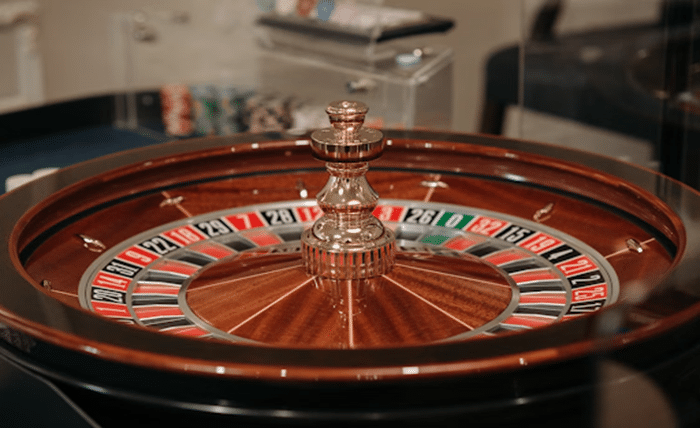
A money wheel looks simple from the outside. The host pushes the wheel, it slows against a flapper, and whichever slice sits under the marker settles the round. The real decision happens before the spin, when a player has a single budget for the round and has to decide how much goes where.
Anyone who keeps funds in crypto faces a wrinkle here, because a wallet can be worth noticeably more or less by the time of the next session. A good way to see the mechanics in action is a title like adventures beyond wonderland live by playtech, where the wheel mixes plain number segments with bonus segments that trigger a separate feature round.
Why the Two Kinds of Spots Behave Differently
Most of the action on a money wheel lands on numbers. Picture the smallest multiplier filling dozens of slices and showing up almost constantly, while the largest gets a couple of slices and may skip a whole hour. On most layouts the lowest multiplier takes nearly half the slices, and the top number gets two or three.
Bonus spots work the other way around. They are rare, they trigger a feature round with its own multipliers, and a single hit can pay many times more than any number. Three habits follow from that difference:
- Low multiplier numbers pay so often that they fund the waiting time.
- Treat bonus spots as the part that adds variance, not steady income.
- Never judge a split by one spin, because the rare segments need many rounds to show their true frequency.
Reading the Wheel as a Frequency Map
Before placing a single coin, count the segments. A wheel with 54 positions and 23 of them carrying the lowest number tells you that spot will land roughly four times in ten. The same count shows a bonus spot appearing perhaps once in 25 spins.
That frequency gap is the whole reason to divide a stake at all. Betting everything on the rarest spot means long dry stretches, while betting everything on the commonest number means small, repetitive returns that barely offset the house edge built into every segment.
Three Sample Splits for a 100 Unit Round Budget
Here are three ways to carve up a 100 unit budget for tonight. Treat these rows as shapes to copy, since each wheel prints its own segment counts and multipliers.
| Approach | Share on numbers | Share on bonuses | Session feel |
| Careful | 90 units | 10 units | Regular tiny wins, features almost absent |
| Midway | 55 units | 45 units | Mild swings and a feature round now and then |
| Feature hunter | 15 units | 85 units | Long waits between sudden big swings |
Adjusting the Split as a Session Develops
Treat the first division as a rough draft, nothing more. Say someone opens with the middle split and sits through ten spins without a bonus. Shifting the next few rounds toward numbers is entirely fair, but only because patience ran thin, since the odds of a bonus never rose. What changes is the player’s tolerance for waiting, and the split should follow that, not a hunch about the wheel.
Jot down the opening budget and a point where play ends before the wheel starts. A limit written down beforehand feels fussy, but it stops the urge to add more money halfway through a losing run, exactly when it usually peaks.
Practical Habits for Managing the Stake
Splitting a stake is half of the job. The second half is how big each round should be against everything set aside for the night. Spread 200 units across rounds of 3 or 4 units and a quiet hour still leaves around fifty spins, plenty for judging a split fairly before the evening is over. Holding crypto adds a wrinkle, since the budget’s worth can change between sessions without the owner ever touching it. Writing the budget down in a stable currency before the first spin gives every round a fixed yardstick, however the coin moves later. A fixed reference value makes every comparison between sessions meaningful and easy to follow when the notes are reviewed.
A notebook entry takes two minutes, yet it pays back for months. Write a few lines after each session, even a quick phone note, covering these items:
- The starting budget and the closing balance.
- How many spins landed on number spots and how many on bonus spots.
- Whether the split suited the player’s mood during the actual session.
- Every stake change during play, with a short reason beside it.
Read back through a month of entries and the real pattern appears, either the favourite split fits the player’s patience or it merely thrills during the actual spins. Spin results are out of anyone’s hands, which leaves the division of money before the wheel moves as the only real decision a player truly fully owns.